


Whether you’re planning a wedding, choosing a birthday gift, or simply brightening someone’s day, one question comes up time and again: how many flowers should a bouquet actually contain? The answer depends on several factors, from the size and style you’re after to the occasion and your budget. This guide will help you navigate the world of flower counts so you can create the perfect arrangement every time.
Why the Number of Flowers in a Bouquet Matters
The number of flowers in a bouquet isn’t just about aesthetics – it can influence the overall feel, the message you send, and how polished the final design looks. Too few stems, and an arrangement can feel sparse; too many, and it may look overcrowded or lose its shape. Professional florists carefully consider flower counts to ensure every bouquet strikes the right balance between fullness, colour, and structure.
Understanding how many flowers you need also helps with budgeting. Whether you’re ordering a simple bunch for delivery or planning elaborate floral designs for a wedding, knowing the right quantity keeps costs manageable and avoids waste.
Bouquet Sizes: A Quick Guide
Bouquets generally fall into a few standard size categories, each with a different stem count:
Small bouquet: A petite arrangement typically features 6-12 stems. These are perfect for a simple gift, a bedside table, or a bridesmaid bouquet. They offer a delicate, understated look that works beautifully with focal flowers like roses or peonies.
Medium bouquet: Ranging from 12-24 stems, a medium bouquet is the most popular choice for birthdays, anniversaries, and everyday occasions. This size gives you enough room to mix blooms, greenery, and filler flowers for a lush, well-rounded design.
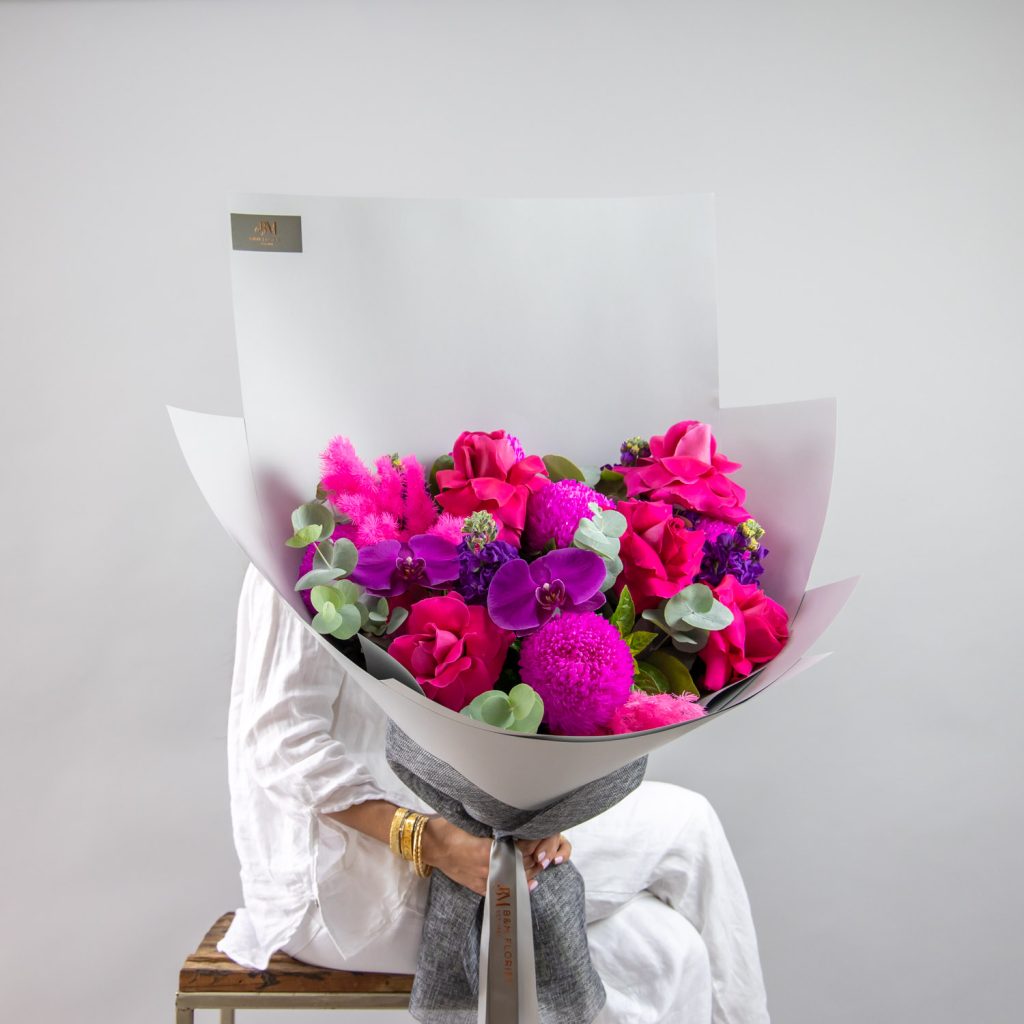
Large bouquet: With 24-36 stems or more, a large arrangement makes a bold statement. These are ideal for grand events, centrepiece displays, or when you really want to impress. Expect a rich combination of focal flowers, accent blooms, and plenty of greenery.
Choosing Focal Flowers for Your Bouquet
Every beautiful bouquet starts with its focal flowers – the star blooms that draw the eye. Roses, lilies, sunflowers, and peonies are popular choices because of their size and visual impact. Typically, focal flowers make up about a third to half of the total stems in an arrangement.
Once you’ve chosen your focal flowers, fill in the gaps with complementary blooms and filler flowers such as baby’s breath, wax flower, or eucalyptus. This layered approach lets you create depth and texture without needing an enormous number of stems. A mix of different flower types and greenery is what gives a bouquet that effortless, professional look florists are known for.
Designing a Bridal Bouquet: How Many Flowers Do You Need?
Wedding flowers deserve special attention because they’ll be front and centre in photographs for years to come. A standard bridal bouquet typically contains 24-36 stems, though the exact count depends on the size of the blooms you choose and the style you’re after.
For a classic round bridal bouquet, plan for around 25-30 stems of mixed flowers and greenery. If you love a loose, garden-style wedding bouquet, you may need more stems – sometimes 30-40 – to achieve that effortless, overflowing feel. Bridesmaid bouquets are usually smaller, around 10-15 stems each.
When you plan your wedding flowers, don’t forget about boutonnieres, corsages, and table arrangements. Florists often recommend ordering 10-15% more stems than you think you’ll need to account for any flowers that don’t open or arrive damaged on the day.
The Meaning Behind Flower Numbers
If you’re sending flowers as a gift, the number of stems you choose can carry symbolic meaning. A single stem symbolises love at first sight or devotion. Three flowers traditionally represent the words “I love you,” while a dozen roses is the classic expression of romance and appreciation.
Six stems can symbolise infatuation, and a bouquet of nine flowers conveys eternal love. Odd numbers are generally preferred in floral design, as they tend to create a more natural, visually pleasing arrangement. Even numbers, on the other hand, are sometimes associated with sympathy or remembrance in certain cultures.
Understanding this symbolism helps you choose the right count when you order flowers for a specific occasion – whether it’s a birthday, anniversary, or a gesture of comfort during difficult times.
Tips for Getting Your Flower Count Right
Here are a few practical pointers to help you decide how many flowers to include in your next bouquet:
Consider the bloom size. Large-headed flowers like hydrangeas and sunflowers take up more space, so you’ll need fewer stems. Smaller blooms like spray roses or daisies require more stems to fill out an arrangement.
Think about greenery. Foliage and filler flowers add volume and texture without significantly increasing cost. A generous amount of greenery can make even a modest number of blooms look full and beautiful.
Match the occasion. A simple bouquet of 6-10 stems is lovely for a casual gift or delivery, while a large event like a wedding calls for more elaborate arrangements with higher stem counts.
Work with your budget. If you’re working within a tight budget, choose fewer premium focal flowers and supplement with affordable fillers. DIY arrangements are a great way to stretch your floral budget further.
Ask a florist. When in doubt, consult a professional. Experienced florists can recommend the ideal quantity and flower combination to suit your style, event, and budget.
Ready to Create Your Perfect Bouquet?
At B & M Florist, our experienced team can help you design a stunning bouquet with exactly the right number of blooms for any occasion. Browse our collection or get in touch today to bring your floral vision to life.
Frequently Asked Questions
What factors should I consider when determining how many flowers to include in a bouquet?
The main factors are the size of the bouquet you want, the type of blooms you’re using (larger flowers need fewer stems), your budget, the occasion, and personal preference. Consider whether you’ll include greenery and filler flowers, as these add volume and reduce the number of focal blooms you need.
How does the type of occasion influence flower counts?
Casual occasions like birthdays or thank-you gifts typically call for smaller arrangements of 6-15 stems. Romantic gestures often follow symbolic numbers, such as a dozen roses. Weddings and large events require significantly more flowers – a bridal bouquet alone may need 24-36 stems, with additional arrangements for the ceremony and reception.
What are the guidelines for different types of bouquets regarding flower numbers?
A small bouquet uses 6-12 stems, a medium bouquet 12-24 stems, and a large bouquet 24-36 or more. Bridal bouquets generally need 24-36 stems, while bridesmaid bouquets are typically 10-15 stems. Centrepiece arrangements vary widely depending on the vessel size, but often use 15-25 stems each.
What symbols are associated with various flower counts?
A single flower represents devotion or love at first sight. Three stems say “I love you.” Six stems symbolise infatuation, nine represent eternal love, and a dozen is the classic expression of deep romance and appreciation. Odd numbers are generally favoured in floral design for their natural, balanced feel.
Are there recommended styles for particular flower counts?
Yes – smaller counts of 6-12 stems suit minimalist or modern designs and work well as posies or hand-tied bunches. Medium counts of 12-24 stems are versatile for round, garden-style, or cascading designs. Larger counts of 24 stems and above are ideal for statement pieces, lush bridal bouquets, and dramatic centrepiece arrangements where you want maximum visual impact.
